Eutopia: the Book
Some background … on how this came to be.
Notes from a presentation in 2022
I was young, full of ideals, and totally enjoying university life. I attended six, in three countries. Wait. I’ll have to explain why I went to so many universities I guess. Well, it’s not because I was such a scholar. Why did I go to all these different universities. Hmm
Well, without knowing it at the time, I was looking for my own personal utopia – and that was way before I even knew that there was such a thing called utopia … but I did know that when I used the GI bill, after the Army, I found out just how ignorant I was. Something was missing in my general education, and this may be true for billions of people. As for me, by and by, attending classes and reading, learning, my eyes began to open, and I was like, wow, it’s a big world! Intricate, varied and rich, with inspiration, art, beauty and yes, tragic stories too. Yes, there’s so much to understand, to learn!
University. I was like a kid in a candy shop – I would go off to a science microbiology class in the afternoon, then it’s PE time – doing a little bit of gymnastics; and then I would take a class in art or humanities. I actually started learning/playing the piano – too bad I didn’t continue that. But then I would study Spanish and German and well, you have the idea. Varied – following my curiosity. I was young, full of ideals, and totally enjoying university life. I could pinch myself – Here is this wonderful opportunity to learn this and that, and meet other curious and hungry students.
I didn’t know it at the time, but this was my own personal utopian experience. I thought, how wonderful it is to just to take in this variety of ideas, experiences, aesthetics and perspectives. And then there was the socializing, music and parties. Enriching. And with the ideals that I was picking up in these different classes and universities, I got to the point where I said Well, I think I’ve tried this particular “restaurant” for a while and I wonder how that restaurant over there is!
So I went from the University of Colorado to Metropolitan State in Colorado, and then attended Hunter College in New York, which flew me off to Seville Spain for a semester abroad. Cool. Exciting. A semester at Heidelberg University, which was a bit over my head – but that was a lesson too. For years I was just tasting, looking towards the next thing, striving to understand an ever bigger, complex world. I guess I was very hungry the whole time, just trying to fill this inner quest, a drive, somewhat like a void, and slowly understanding that I was imprinted with what I was taught about how the world was. Indoctrinated, I was to slowly learn.
I was drawn to philosophy, admiring the great ideas, the perennial philosophies. As I traipsed along this educational trail, however, it slowly dawned on me that, even though I personally was having a great time … the more that I looked at and understood the world, in general there was a lot of pain. Could have been my Buddhist studies, but there’s a lot of suffering, and a lot of people who were miserable. I thought, even though I personally could create a life that was for me very fulfilling, stimulating, expanding and interesting in so many different ways but … as I look out there into the world, there’s a lot of troubled people, deprivation, hunger, etc. What’s that about? So there must be something that needs to be shifted, changed in the social or political system – because we’re in this society, these societies, together … and so I wondered and read in this specific direction. This led me to ask – How are we organizing things, how are we making this larger construct of living together? It doesn’t seem to be working for everybody.
With that question in mind, I signed up for a semester in poli sci, or political science, and was quickly disappointed. During that one semester it dawned on me – Wait a minute, they’re just trying to fit us into the system at present, and feed it. Well, I was not impressed with that so um onward to … political philosophy, and then started comparing different philosophies – socialism, communism, democratic socialism, Fabian socialism, capitalism, even enlightened capitalism – many options and theories, for our democratic processes are varied, like humans – many opinions; and so there was a parallel, as it were. I was comparing all these different systems somewhat like I was comparing these different universities, states and countries. Educational and social shopping, one could say. I asked, how is this system organized and over there, see how decisions are made with that particular system, and this one over here includes some interesting points and ethical features.
From my family experience – I’m a military brat; my father was in the Air Force, so it was pretty easy for me to sign up for three years in the Army. Perhaps that was part of my planned karma and life lessons? For it dawned on me, years later, that Wow, the military system is a communist system – which pretty much every military person would want to argue about, deny – but if you take a look at how it’s organized … monies from the larger society is put /allocated towards this group, the military, but theoretically it could be any community or social system such as libraries, fire and medical emergency services … but, within this group, there is no monetary focus or specifically, you don’t have to produce, to make money. It’s nationalized. The purpose, within our western capitalism, of the military is to protect, it’s there to defend – and so they are outside of that pressure to make money. (The military industrial businesses are in it for the money, but that is another story) And within this huge military system, they have their own medical services, food options, individuals have a constant income – they’re pretty much taken care of – which is, interestingly enough, the ideals of the communists.
Okay, how interesting … but then I say, not so fast! We don’t really want a military communist system! ha. That doesn’t seem to be so positive either – we have examples of that in history. Military societies are not the way to go. As I was in college the Soviet Union was not really the ideal. It was the Red Scare – which is an interesting phrase and perspective today in the US. Okay, not that system but how about a variation, a caring and positive system of distribution and order? Remembering the whole while that I’m thinking about the most ideal system – or how could we create the most happiness for everyone? That was the ideal.
All this searching, by the way, was after I had my personal mystical experiences, and so I had a spiritual perspective already – before I attended college, actually. So an ideal society was more than a safe place to live and how we could equitably use money or to share resources, as well as enjoy pleasures and amusements – the larger aim was a truly fulfilling life, and more than that, a spirit-filled conscious life of caring for each and every person within the system, the society, itself. Yes, I’m an idealist.

So back to the different types of organized systems, structures in which one can enjoy and thrive within a community and a society. As for these diverse systems, these various -isms such as communism, socialism, capitalism and so forth – and after again a couple of years (remember I’m still going from one university to another, eventually graduating in Virginia), it occurred to me – and this is also a weird idea – I concluded that any system you wish can work. Yes, it can be communist, it can be capitalist, it can be a socialist – any system will work if the correct, or heart-felt competent people are in charge. Yes, basically if the leaders are capable, organized and heart centered, caring for the welfare of everyone, and then it, that system, will work. So, bottom line, it’s a matter truly of leadership; it’s a matter of who’s in charge!
Take for instance monarchy, or an oligarchy or a democracy, which is saying you (or we the people) are ruled by one individual, or by the few, or by the many; and so I repeat, it just depends on who’s in charge, because with a monarchy you can benefit from a gifted visionary. However, one could just as well suffer through his son, a madman, which will bring you chaos – there are many examples in history of deranged dictators. Yes, there could have been a great leader at one point but then his boy, junior – now where will he take us?! No, hereditary monarchy is not the way to go. The same can be said of a small group of leaders, or in a republic or democracy – wise leadership makes the difference.
Anyway, in a utopia there is the ideal of how can we get everything done in an economical, efficient, practical, caring and and fair manner where everybody wins. Well, there’s a concept! This ideal of a utopia has been a focus point, an ideal, throughout known history. The first Western proponent of such a society was Plato in ancient Greece. He wrote The Republic, and within this tome was his ideas of how we all could ideally live together, and what are the best ways to do that. Plato wrote of the people of gold, silver and bronze – which wasn’t a declaration of worth but acknowledgment of natural, innate, abilities and talents. The gold people or those with broader and wiser abilities, could be born amongst any group; it wasn’t a caste system. Due to their natural abilities and leadership skills, Plato said that they were the ones that should be in charge, but only after the nurturing, guiding society supports them and trains them for this responsible position. Yes, after a long, thorough and broad education would they be more apt to lead in a good and noble manner. He believed that these golden people, from childhood, should grow up in a kind of a military esprit de corps, in a semi-communist family in which they would share everything in common, encouraging a non-materialistic ethos, so as to dull the lustre of avarice, ego and greed. This golden troupe would be serving the community. Either sex could serve, and so he was an early feminist. As they are of the gold caliber or energy, they would innately have a sense of a greater vision and unity, not being pulled into selfishness. In short, Plato mentioned, suggested, many other proactive and visionary things about how we can be organized and fair. This tome has inspired many people throughout history.
It took 2000 years until the next utopian work, in 1516, with Thomas More’s book, Utopia. He was living in the inspiring times of new worlds, new possibilities, after the seminal year of 1492 – we know what happened then. For many Europeans there was suddenly this new world concept, wow a new world – and the many possibilities, almost like a blank slate … and in this new place we could start a new society, perhaps a city-state or a community! Anyway, More called his vision utopia with a u because that meant, in Latin, no place. He partly titled it for political reasons – he didn’t want to have the authorities at the time get on him about fomenting revolutionary ideas. He explained that his work was an imaginative location, it’s no place. He put this ideal society onto a make-believe island, and so described this new world. 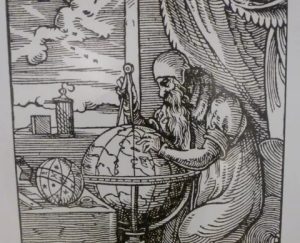
This genre, this type of writing, is different than science fiction. The whole idea is not to write sci fi with a love plot, or an adventure or mystery, or something like that, although that would spice it up. No, these writers want to describe how we can have a good and just system, and plenty for all. That’s the whole point – and one of the ways to do that is to have a make-believe place elsewhere because you have to separate it from our present societies … with all of the issues and the sorrows, poverty and the jealousies, and negativities we know too well which could contaminate it. Yes, to basically create or envision something new, one separated from the present, and so the dreamers described the ideals in these make-believe lands. Blue-prints, as it were.
A hundred years after More new versions of utopian societies really started to kick in, and these many different authors had their own visions. (I have a list of the utopian literature at the end of this article, as well as in my novel, Eutopia.) For instance, Christianopolis was one of the visions, and you can imagine what the basis of that was. Then came City of the Sun by Thomas Campanella in 1623, New Atlantis by Francis Bacon in the 1600s, etc.
In the mid 1800s, coincidentally when the planet Neptune was discovered, there was this stream of new idealism that inspired many ideas and social contracts or experiments of how we can ideally live with each other. Now we were building communities – going beyond speculative fiction. Can we make this happen? These organized communities established themselves somewhat like communes or ashrams – these spiritual communities in various places, mostly in the United States, experimented with many different options. For instance, there was an industrialist by the name of Robert Owen, in the 1820s – 1840s who established actually two different communities. Even though he was a businessman, an industrialist – he had a successful factory in Scotland – he created a factory town for his workers, which included a school and recreation, etc. … remember this was in the early 1800s. He offered opportunities, good homes etc., and through his efforts of social reform, he proved to other businessmen and world leaders that one could help the lower classes and still make a profit. He advocated for higher standards of living, and education. Later he took that idea, that concept, and tried to transplant it to the United States, to a place called New Harmony. This place, this town, already had a history. It was established by the Harmony Society in 1814 under the leadership of George Rapp, who led some idealistic Lutherans from Germany, and the town was originally named Harmony. Indiana. This founding community had moved on, and so Owen had a ready-made option there, complete with buildings, tools, equipment, farmland, etc., but he made a major miscalculation. He just invited people to come on over and be part of this new experiment. As simple as that. It didn’t work. His community in Scotland thrived because of the common work and community of his factory workers, which provided an income too. I guess it was sort of a free for all in Indiana. No go.
Going back to Plato, would it take a certain type of person who would be open to such a thing? – to make it work? What Owen did was to give whomever this opportunity of a community. Hey, come on over! but they didn’t have the concept, they didn’t have the ideas or cohesion, they didn’t have the ideals, and it didn’t work.
Where to plant and nurture this delicate social experiment? And who should be involved?
Many communities felt a certain pressure from locals, who had another paradigm, who had a perspective on how life should be expressed, and how “normal” people should behave. Such concepts are more often than not imprinted on each generation, which brings us (later) to the topic of education and child rearing. We have identified mass hypnosis here, and that is another matter. Bottom line – So many experiments had this external pressure. These experimental communities, over the centuries now, really couldn’t make it on their own; they need to have a broader appeal, or support, in order to move towards a thriving utopia. 
You may recall the same thing in Oregon. I had watched the Rajneesh documentary on Netflix, a multi- episode series. The ashram, the community, started in Poona, India, following the teachings of Rajneesh. In the early 1980s they decided to move to Oregon and establish a new community there. They attempted to launch a utopian village there (in redneck territory) and they, dressed in their oranges and reds, freaked out the locals. Rajneeshpuram, Oregon. I did briefly visit, but the machine guns kind of scared me away. I asked myself, what is happening here? I understand that the locals were suspicious, and even threatened by these strange people coming into our Oregon, our land, over here and where is Jesus? … what kind of notions are they trying to bring in here?! Clashing paradigms.
Well, back to the literature of utopia – the various societies are theoretically separated from “the old world” or old order; clean and fresh, so that it is uncontaminated (is that the right word?); it’s not influenced by the larger general uh prejudices and expectations of how we’re supposed to be – and so that has happened time and time again. Alas, a long tradition – it can go in many different directions but the basic idea … again, just to confirm that my book is not a science fiction thing – no life-threatening scary plots and/or over-the-top adventures, usually with danger, aliens and some fighting, on another planet, no, not that.
But I think my Eutopia could be a great movie.
My merry band of astronauts will fly off into the future and discover all kinds of chill innovations, new customs and adventures. They will meet new friends, and lovers. Functional individuals who are well-rounded, content and engaged. A functioning, thriving society. What a concept.
So I plan to stick to the idea of a utopia – a fabulous and altruistic society. I hope to describe how really some structures and innovations, such as in education, psychotherapy, cultural attitudes, division of labor, work and play and so forth – can really, realistically, function, and thrive. A place where all of us, all sentient beings, can live together in a positive way, good for evolution and for the planet.
Bottom line, building upon my own mystical experiences, my educational experiences – I envision well-rounded, satisfied citizens thriving in idealistic scenes with great music, a trip to the beach, adventures. Important stuff. Anyway, this will be my version of utopia; this book and dream – perhaps downloaded from the future? hmm. Obviously I’ve been thinking about it for a long time and I wanted to share with you here some preliminary thoughts on utopia – or Eutopia, which means good or true place.
Let us imagine, hope and contemplate it all. 
Spoiler alert – Eutopia will not happen in our lifetime. We’ll have to reincarnate to enjoy it. But the seeds can be planted today.
Stephen Poplin